Understanding Reef Ecology with Master Reef Guide Eamonn Hallows
The Great Barrier Reef is often spoken about as one of the natural wonders of the world, but how many of us truly understand what makes it work?
In Episode 13 of The Middle Ground Project, we sat down with Master Reef Guide Eamonn Hallows to unpack the incredible biology, ecology and interconnectedness of the Great Barrier Reef. From coral cays and migratory whales to parrotfish producing beaches and the reef’s role in the global carbon cycle, the conversation explored why the reef is far more than just a collection of colourful corals.
From the Other Side of the World to the Great Barrier Reef
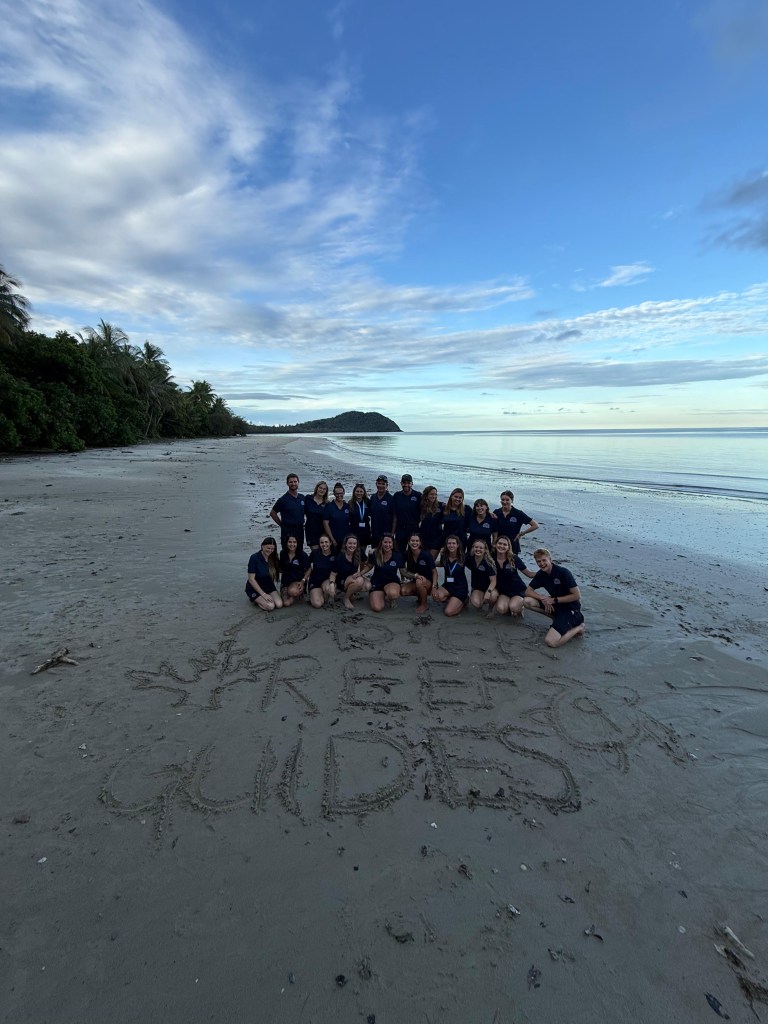
Eamonn’s journey to becoming a Master Reef Guide is one built on a passion for the natural world and a fascination with marine ecosystems. Now working on the Southern Great Barrier Reef, his role involves not only educating visitors but also helping people understand the complex ecological relationships that make reef systems function.
At its core, Eamonn’s message was simple: the reef is not just beautiful, it is alive, dynamic and deeply connected to the health of our planet.
One of the first topics explored was a question many people still get wrong: what exactly is coral?
Despite looking like a rock or plant, coral is actually an animal.
Tiny coral polyps build calcium carbonate skeletons that accumulate over thousands of years, creating the structures we know as coral reefs. These polyps also have a remarkable symbiotic relationship with microscopic algae called zooxanthellae, which live within their tissues. Through photosynthesis, the zooxanthellae provide the coral with much of the energy it needs to grow and build reefs, while the coral provides the algae with shelter and nutrients.
The Great Barrier Reef supports thousands of species, from microscopic organisms through to sharks, turtles, manta rays and humpback whales, making it one of the most biodiverse ecosystems on Earth.
How Coral Cays Are Born
The discussion naturally led into coral cay formation, particularly relevant for places like Lady Musgrave Island.
Many visitors see these islands as permanent features of the landscape, but they are actually relatively young and constantly changing.
Eamonn painted a vivid picture:
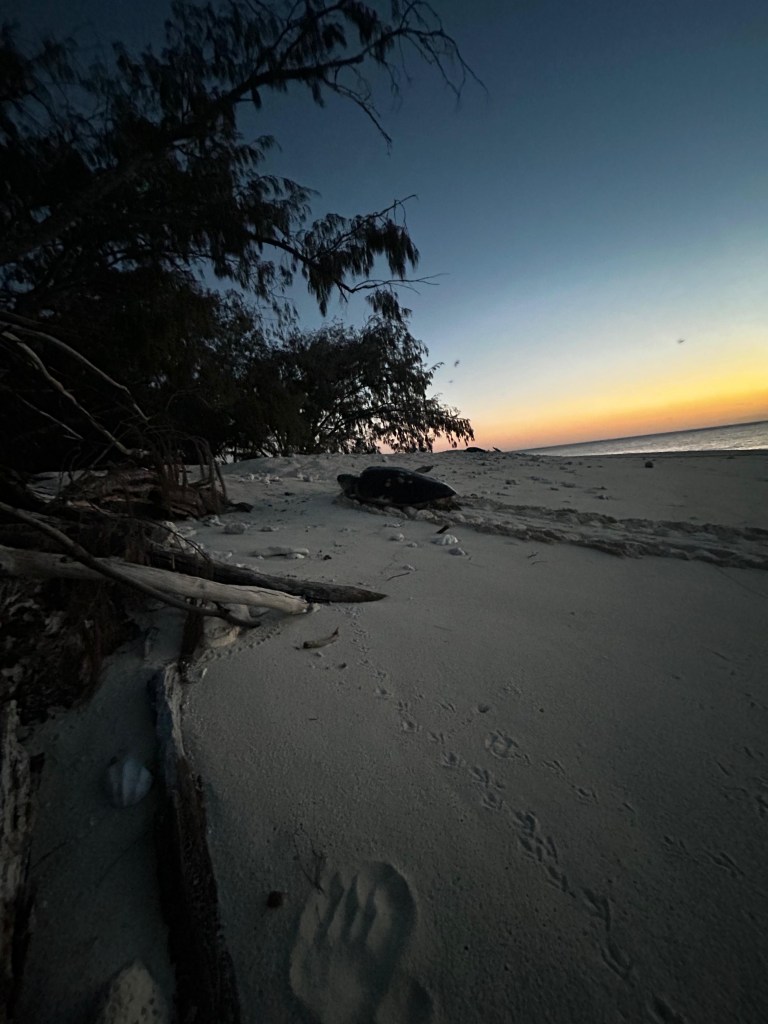
“If we pictured Lady Musgrave 3,000 years old, it would be a little sand bump that would have just been like the size of your living room right now.”
Over thousands of years, waves, currents, coral growth, seabirds and vegetation gradually transform small accumulations of sand into the islands we see today.
One of the most fascinating parts of the conversation centred around parrotfish. As Eamonn explained:
“Bumphead parrotfish are another big one because they’ll actually just chew coral up and the parrotfish poop out sand.”
These fish feed by scraping algae and dead material from coral surfaces. In the process they grind coral skeletons into fine particles that eventually become the white sands found across tropical islands and beaches.
Eamonn added:
“A tonne of fully grown parrotfish will produce a tonne of sand in a year.”
The process highlights just how interconnected reef systems are, with fish, corals, ocean currents and wildlife all contributing to island formation.
Predators Matter
Another important theme throughout the episode was the role of predators in maintaining healthy ecosystems.
Whether it’s sharks, large reef fish or other top predators, these animals help regulate populations and maintain balance throughout the food web.
Unfortunately, fear often dominates public perception of many species.
Emma reflected on Australia’s relationship with potentially dangerous wildlife:
“We have crocs, we have sharks, we have dingoes, we have snakes… and therefore we lose the education about how to be around these species.”
Rather than viewing these animals purely through fear, Eamonn goes on to emphasis the importance of understanding their behaviour and ecological role.
Sometimes all it takes is a firsthand experience to shift perspective.
“When you go swimming with a shark for the first time and you realise that it’s really not out to get you.”
Coral Bleaching and the Future of the Reef
No discussion about the Great Barrier Reef would be complete without addressing coral bleaching.
Eamonn explained that bleaching occurs when corals become stressed and expel the microscopic algae that provide much of their energy and colour.
While corals can recover from bleaching events under the right conditions, increasing ocean temperatures and repeated disturbances make recovery more difficult.
The conversation highlighted the importance of looking beyond headlines and understanding both the challenges facing the reef and its remarkable resilience.
For readers wanting a deeper understanding of the bleaching process and how corals recover, the Reef Authority has an excellent explainer on coral bleaching. Corals are not necessarily dead when they bleach, but they are under significant stress and become more vulnerable to disease and starvation.
Finding the Middle Ground
The Great Barrier Reef is often caught in debates between conservation, tourism, agriculture and public perception.
This conversation reminded us that understanding must come before opinion.
Whether discussing sharks, coral bleaching, parrotfish or carbon cycling, Eamonn’s message was clear: the more we learn about the reef, the more remarkable it becomes.
The Great Barrier Reef is not simply a place to visit.
It is a living system built over thousands of years by countless interconnected species, and understanding those connections is one of the first steps toward protecting it for future generations.

