Finding the Middle Ground Between Snakes and Humans
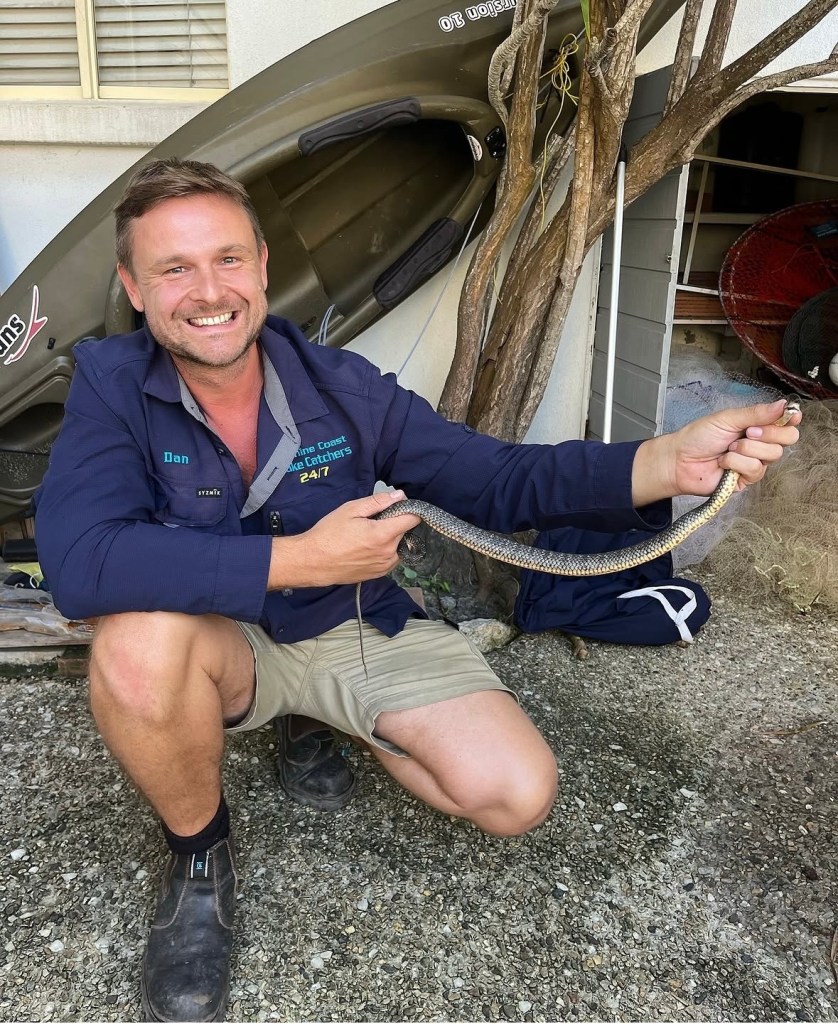
Fear, misunderstanding and misinformation have shaped the relationship between people and snakes for generations. In Episode 7 of The Middle Ground Project, zookeeper and reptile specialist Dan Rumsey joined the podcast to explore one of Australia’s most controversial wildlife topics: how do we safely live alongside some of the world’s most venomous snakes while still respecting their role in the environment?
The conversation challenged many common assumptions about snakes and highlighted how education, rather than fear, may be the key to finding common ground.
“To respect animals, you need to understand them.”
Australia’s Reputation as the Land of Venomous Snakes
Australia is famous for its venomous snakes, with many people growing up believing that a snake encounter is a life-threatening event waiting to happen. Dan acknowledged that the fear isn’t entirely irrational.
“A bite from a highly venomous snake in Australia can kill you. There’s no doubt about it.”
However, the reality is often very different from public perception. Despite having some of the world’s most venomous snakes, Australia records remarkably few snakebite deaths each year thanks to effective first aid, rapid medical treatment and access to antivenom.
According to the Australian Institute of Health and Welfare, snakebite fatalities are rare in Australia, averaging only a handful of deaths annually despite thousands of encounters occurring every year.
Why Snakebite Is a Global Issue
One of the most eye-opening parts of the discussion was placing Australia’s situation into a global context.
Dan explained that while Australians often fear snakes, many developing nations face a much greater challenge due to limited access to healthcare and antivenom.
“The World Health Organisation estimated between 80,000 and 100,000 deaths worldwide from snakebite.”
The World Health Organization classifies snakebite envenoming as a neglected tropical disease, with the highest impacts occurring in rural communities across Asia, Africa and South America where medical treatment can be difficult to access.
Snakes and Livestock: Separating Myth from Reality
For many rural landholders, snakes are often blamed when livestock are found dead or unwell.
Dan suggested that many of these assumptions are based on guesswork rather than evidence.
“A lot of the time they label it as a snake bite.”
While snakebite can occasionally impact livestock, it is often not the cause people initially assume. Understanding snake behaviour is critical when assessing risk.
Dan explained that snakes are not actively hunting cattle or horses.
“The venom isn’t designed to kill a cow, it’s designed to kill a mouse very quickly.”
Most venomous snakes evolved to target small prey species such as rodents. Encounters with livestock are usually defensive rather than predatory.
The Importance of First Aid
A recurring theme throughout the episode was that knowledge saves lives.
Dan stressed that the most practical middle ground for rural Australians is not fear or eradication, but preparation.
“Knowing the first aid could literally save a life.”
Pressure immobilisation bandaging remains the recommended first aid response for suspected venomous snakebite in Australia, with rapid medical attention being essential.
Australia’s world-leading snakebite survival rate is not only due to effective first aid and modern healthcare, but also because of the antivenom program coordinated through the Australian Reptile Park.
For decades, trained staff at the Australian Reptile Park have safely collected venom from some of Australia’s most dangerous snakes, including Eastern Brown Snakes, Coastal Taipans, Tiger Snakes and Death Adders. This venom is supplied to CSL Seqirus, where it is used to produce lifesaving antivenoms that are distributed to hospitals across Australia.
Dan discussed the important role zoological institutions play in both public education and medical research. Without venom collection programs and the dedicated staff who work with these animals, effective antivenoms would not exist.
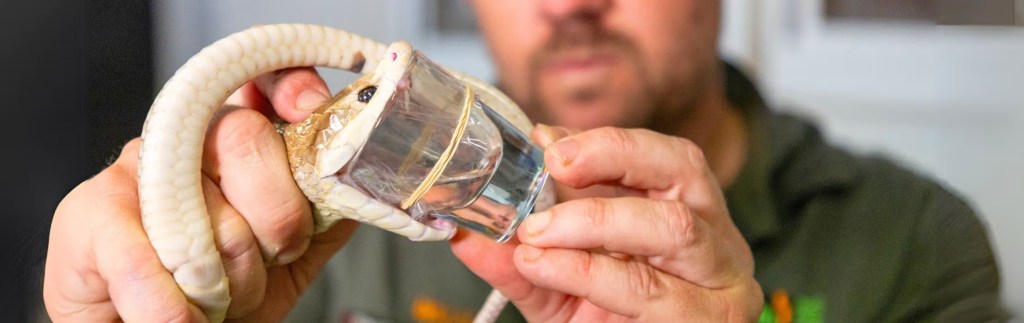
Image: Australian Reptile Park Venom Program
Conservation Through Understanding
Beyond safety, the discussion focused on the ecological importance of snakes.
As predators, snakes help control rodent populations and play a vital role in maintaining healthy ecosystems. Yet many species are killed simply because they are feared.
Dan believes education is the most powerful conservation tool available.
“A lot of our wildlife is incredibly unique and diverse and sometimes needs to be treasured, needs to be protected.”
His message was simple: if you encounter a snake, avoidance is usually the best option.
“If we could just walk away and have that attitude of avoidance, it’s probably the best thing you can do.”
Finding the Middle Ground
The goal of this conversation was never to convince people to love snakes. Instead, it was to encourage a more balanced perspective.
Snakes deserve respect, not because they’re harmless, but because understanding them allows us to manage risk appropriately while protecting an important part of Australia’s biodiversity.
The middle ground lies between fear and fascination. It is built on education, preparedness and a willingness to understand the animals we share the landscape with.
Further Reading
- Australian Institute of Health and Welfare – Snakebite statistics
- World Health Organization – Snakebite Envenoming
- Australian Reptile Park – Snake Venom Program
- Snake Bite First Aid

